Let’s be honest: nobody really needs a mug with a detergent logo, a three-euro discount or a six-month supply of wholegrain crackers. Yet the prospect of winning them changes things. We fill in forms, keep receipts, photograph codes and answer questions about as challenging as “What colour is the sky on a clear day?”
It isn’t greed. It’s psychology.
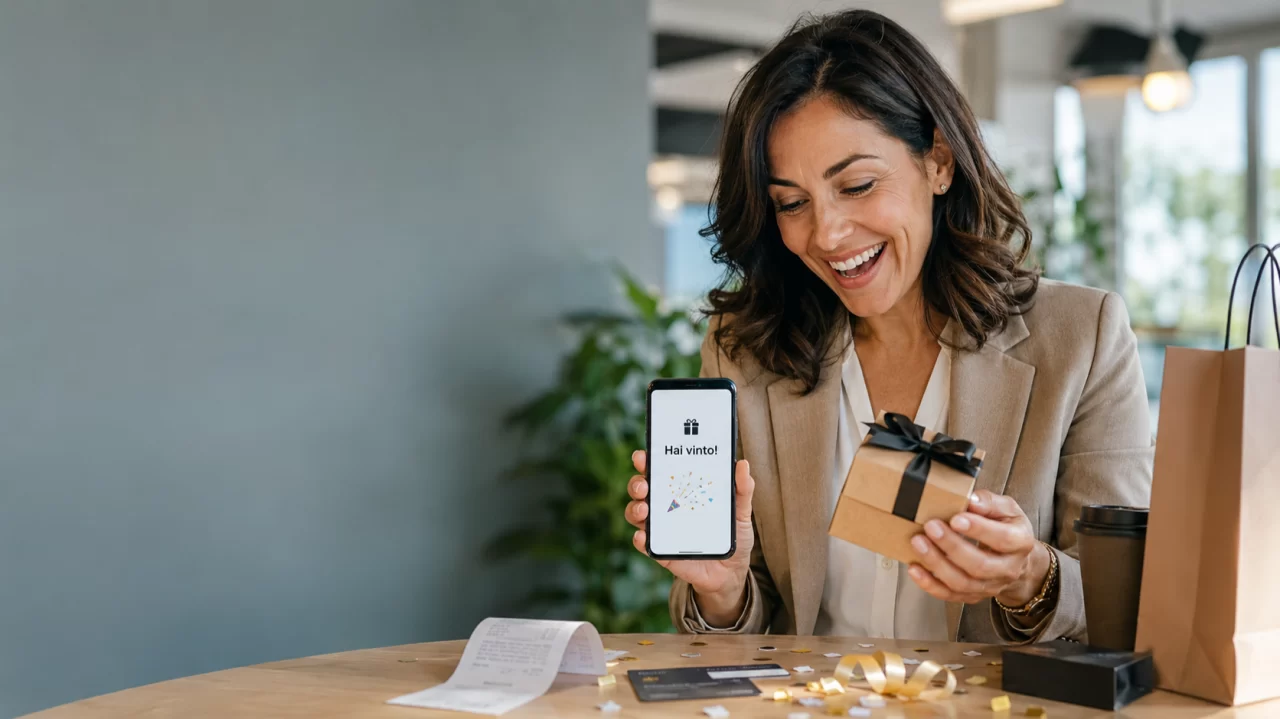
Winning brings a sense of satisfaction that often outweighs the prize’s monetary value. The brain is no procurement department: it doesn’t compare the time spent with the market price of the object won. It registers a positive event. We took part, the system chose us, and for a few seconds we were luckier than everyone else.
The prize becomes tangible proof of a small personal victory. It hardly matters if it is an eight-euro water bottle. It isn’t just any bottle: it is the one we won. That subtle distinction is enough to turn a promotional object into a trophy on the desk.
Promotions work because they create anticipation, curiosity and reward. The chance of getting something makes the experience more engaging. Even a routine purchase, such as a packet of coffee or an insurance policy, feels different when linked to a prize competition, a points programme or an instant win.
What matters is that perceived value depends on more than the size of the prize. The goal also has to feel achievable. A trip to the Maldives sparks dreams; an instant ten-euro win feels possible. And what feels possible prompts action.
That is why frequent small prizes can drive more participation than one spectacular grand prize. The grand prize makes the advertising campaign. The small wins shape behaviour.
There is another powerful mechanism: loss aversion. Once we have started collecting points, stopping becomes difficult. Only two stamps, three purchases or fifty points to go. Leaving the programme unfinished feels wasteful, so we buy one more product to get something “free” that we probably would never have bought otherwise.
The paradox is neat: we spend money to avoid losing a prize.
For businesses, these mechanics do more than increase sales. They can strengthen customer relationships, encourage repeat purchases, collect useful data, stimulate word of mouth and turn an ordinary interaction into a memorable experience.
Of course, offering a prize is not enough. It must fit the audience, the rules must be clear and entry must be easy. If winning a five-euro voucher means answering forty questions, uploading three documents and remembering a password created in 2017, gratification quickly turns into irritation.
The real strength of promotional marketing is that it makes people feel part of the story. For a few moments we are more than customers. We are participants, finalists, winners.
And even when the prize is small, the satisfaction rarely is. Need ideas or support for a successful gamification campaign? Explore how CWmedia can help you design a prize promotion.