Many companies know how much their customers are worth today. Far fewer know how much value those customers may generate over time.
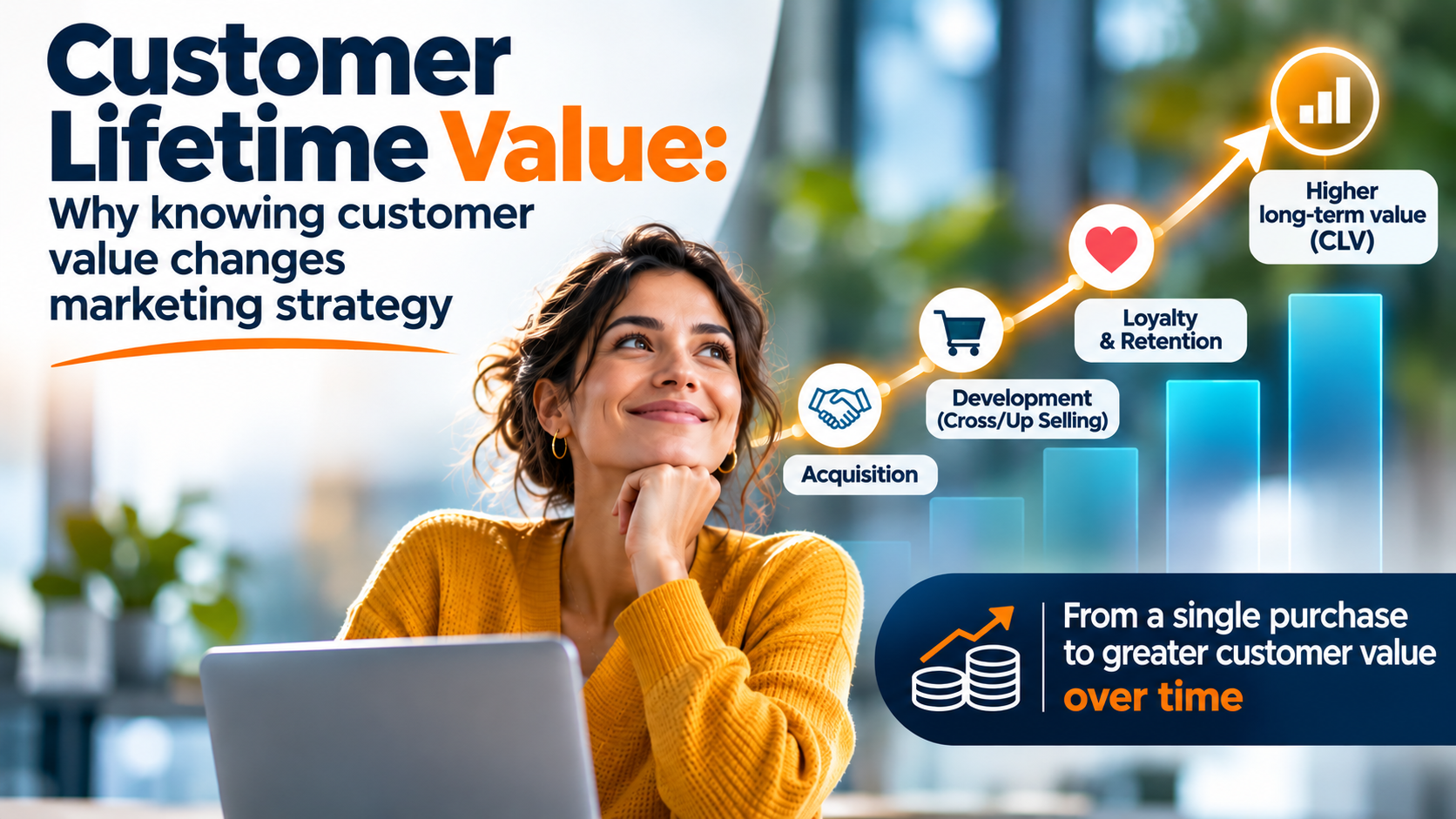
This is where Customer Lifetime Value (CLV) becomes important. CLV estimates the total economic value a customer can generate throughout the entire relationship with a business.
It changes the way companies evaluate acquisition, retention and loyalty because it moves the focus from a single transaction to the overall profitability of the customer relationship. CLV does not simply measure customer value: it helps companies decide how much to invest in acquiring, developing and retaining each customer.
From current revenue to long-term value
Two customers who each generate €500 in their first year may have completely different long-term value.
The first may never purchase again. The second may remain active for five years, increase spending over time, purchase additional services and even generate new customers through referrals.
Looking only at initial revenue can therefore lead to misleading conclusions.
Customer Lifetime Value provides a broader perspective by combining factors such as average purchase value, purchase frequency, relationship duration, margin and retention.
The American Marketing Association highlights Lifetime Value as a way to connect revenue, margin, purchase frequency and customer tenure, also using this information to assess how much a company can sustainably invest in acquisition.
CLV and Customer Acquisition Cost should be analysed together
One of the most important applications of CLV concerns Customer Acquisition Cost (CAC).
Consider a customer who costs €100 to acquire but generates €600 in margin over the relationship. That customer may be far more attractive than one acquired for €40 who generates only €80.
CAC alone therefore tells only part of the story.
Combining CLV and CAC helps companies understand which acquisition channels generate profitable customers and which merely produce volume without sufficient long-term value.
This also changes the way marketing budgets are allocated. A more expensive channel may still be more efficient if it attracts customers who stay longer, buy more frequently and deliver stronger margins.
Not every customer should receive the same strategy
Knowing CLV also helps companies move beyond undifferentiated marketing.
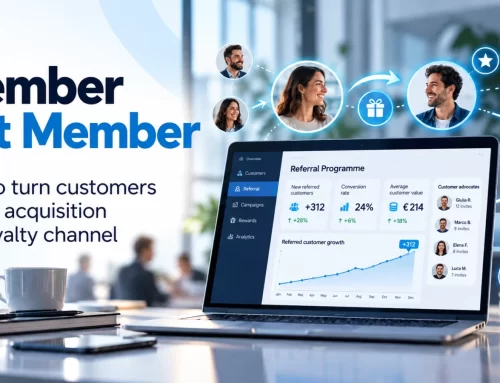
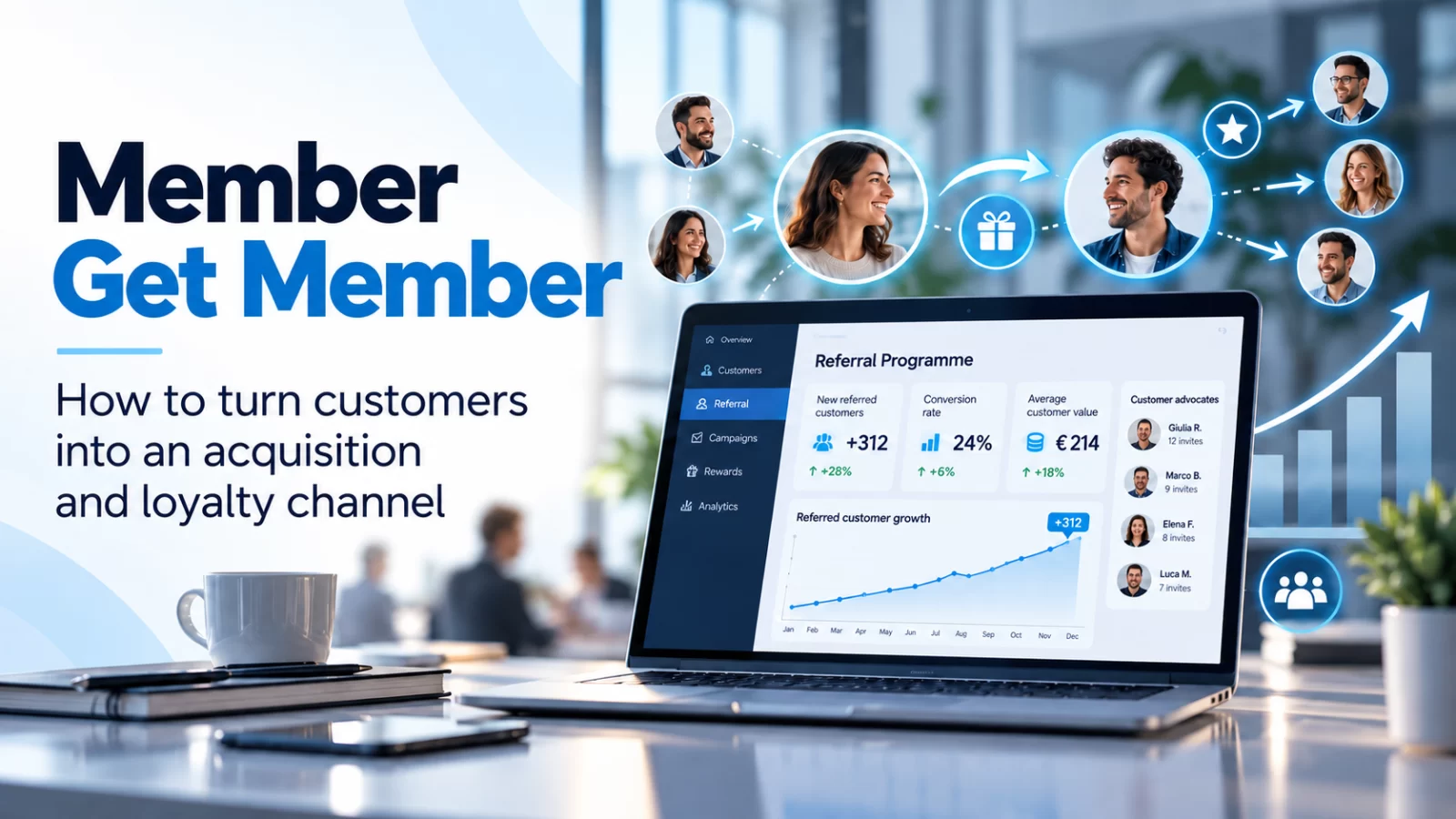
High-value customers may be supported through loyalty programmes, dedicated services, Member Get Member initiatives or advocacy programmes.
Customers with good potential but low purchase frequency may benefit from cross-selling or personalised journeys. Customers showing declining engagement may require retention or reactivation campaigns.
Segmentation therefore becomes not only demographic, but also economic and behavioural.
This allows companies to prioritise resources according to the value and potential of each segment, rather than treating the entire customer base in the same way.
CRM is the operational engine behind Customer Lifetime Value
To use CLV effectively, companies need reliable and connected data.
CRM, e-commerce, customer service, retail, marketing automation and loyalty systems should contribute to a consistent customer view.
If data remains fragmented, the calculated value may represent only part of the relationship.
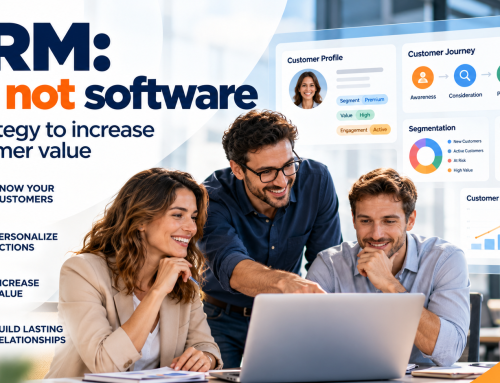
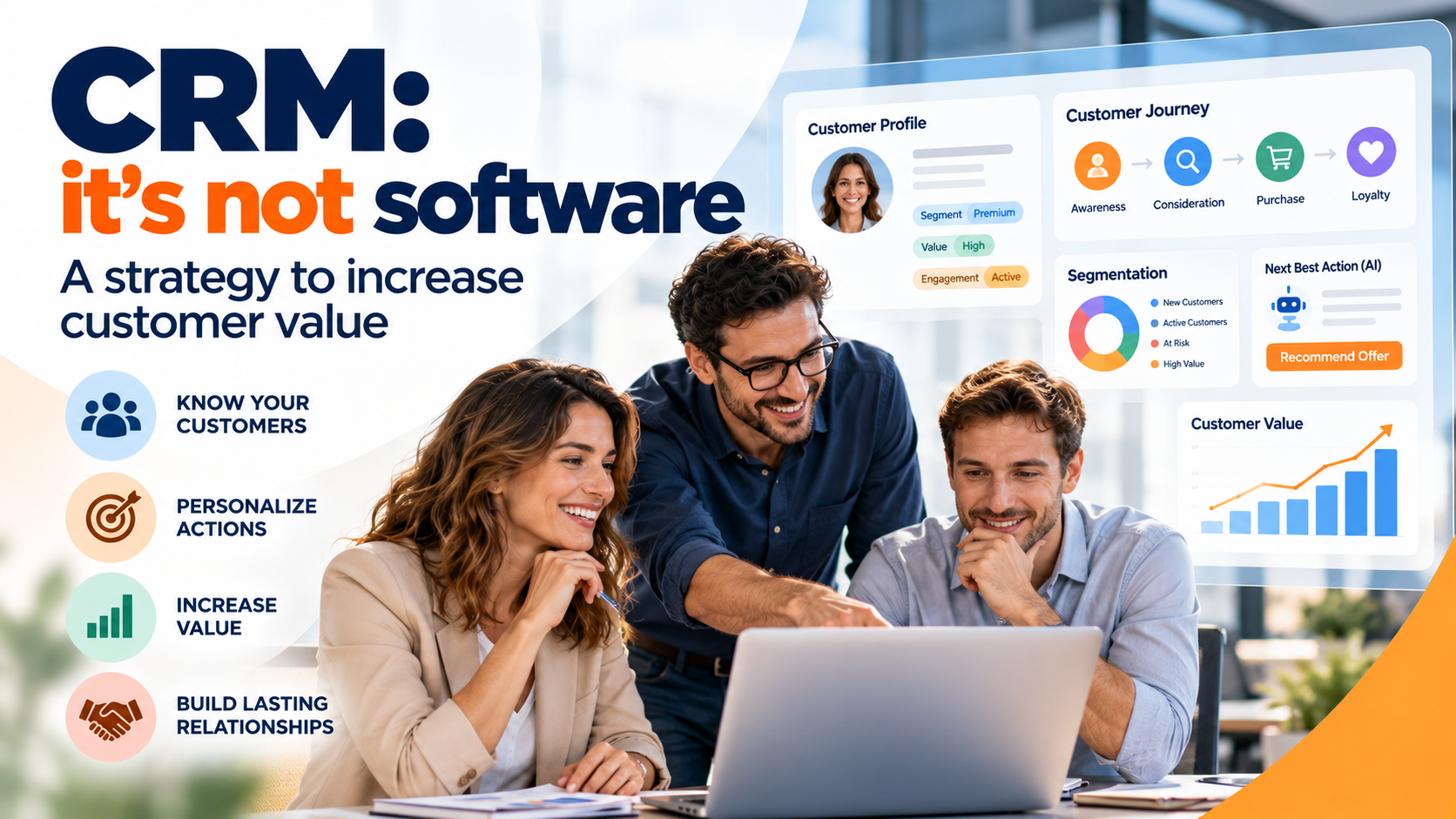
CRM makes it possible to connect customer value, behaviour and action: identifying who is increasing engagement, who is becoming inactive and which initiative is most likely to develop or protect the relationship.
In this sense, CRM is not just a repository. It becomes the operational layer that turns customer value analysis into marketing decisions.
From a metric to a strategy
Customer Lifetime Value becomes truly useful when it moves beyond spreadsheets and enters everyday business decisions.
It can influence acquisition budgets, database segmentation, promotional policies, loyalty programmes, retention initiatives and even service levels for different customer groups.
The question changes from simply “How much did this customer spend?” to “How much value can this relationship still generate, and what can we do to develop it?”
That shift has a direct impact on marketing strategy.
It encourages companies to think in terms of customer portfolios, long-term profitability and relationship development rather than isolated campaigns or transactions.
CWMedia supports companies in developing Marketing, CRM, Customer Value and Loyalty strategies, combining data analysis, segmentation, customer journey design and acquisition and retention initiatives.
Because understanding customer value is not only about measuring the past. It is mainly about making better decisions on where to invest for future growth.